
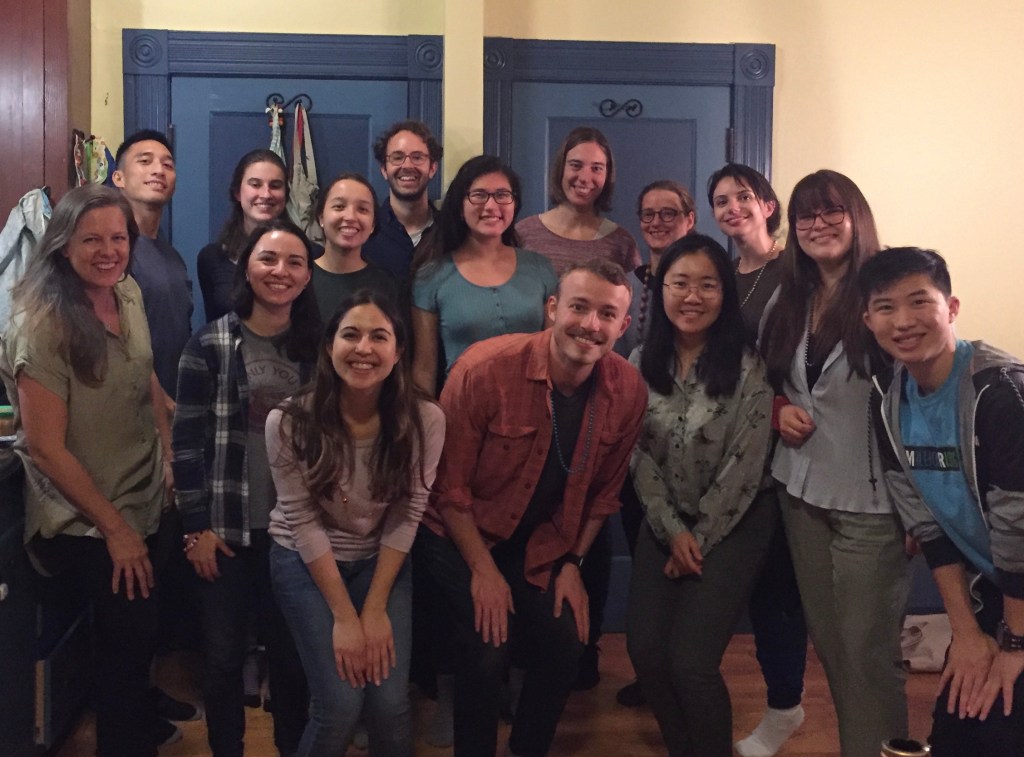
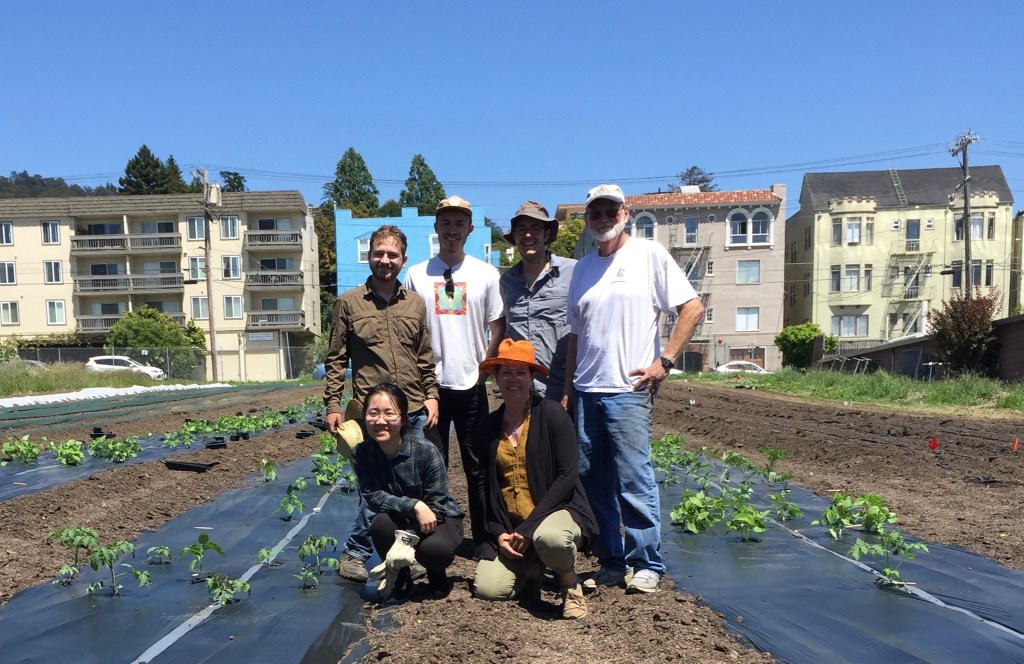
(Newest members: Kama Chock (1st year PhD Student; 2nd from left), Wenke Smets (BAEF Postdoctoral Fellow; 9th from left), Emily Dewald-Wang (Research Technician, 5th from left), and Ana Luisa Soares de Vasconcelos (visiting PhD Student from the University of São Paulo; 3rd from right)
We’ve had a fun and productive 2019, with lots of new arrivals, new projects underway, and new papers. Here are just a few of the Fall 2019 highlights:
- We welcomed many new lab members, including postdoctoral researcher Wenke Smets who is joining us from Belgium on a B.A.E.F. fellowship, new PhD student Mason Kamalani Chock arriving from Hawaii, visiting PhD student Ana Luisa Soares de Vasconcelos from the University of São Paulo, research technician Emily Dewald-Wang who recently graduated from Washington University in St. Louis, as well as many new fantastic undergraduate researchers.
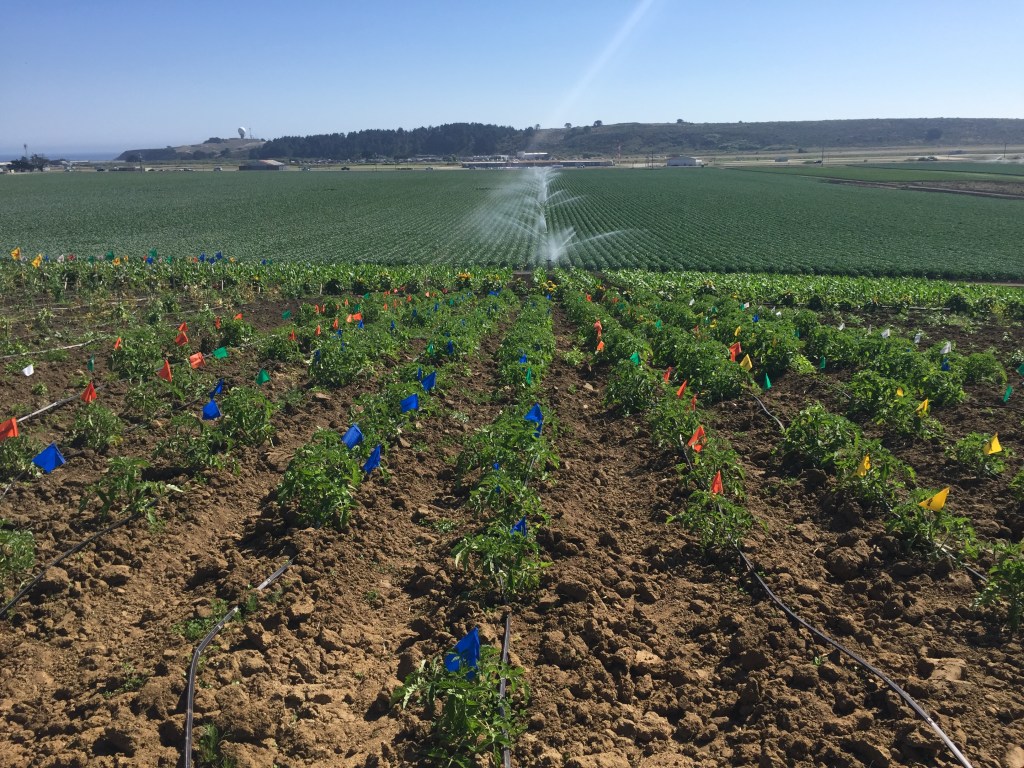
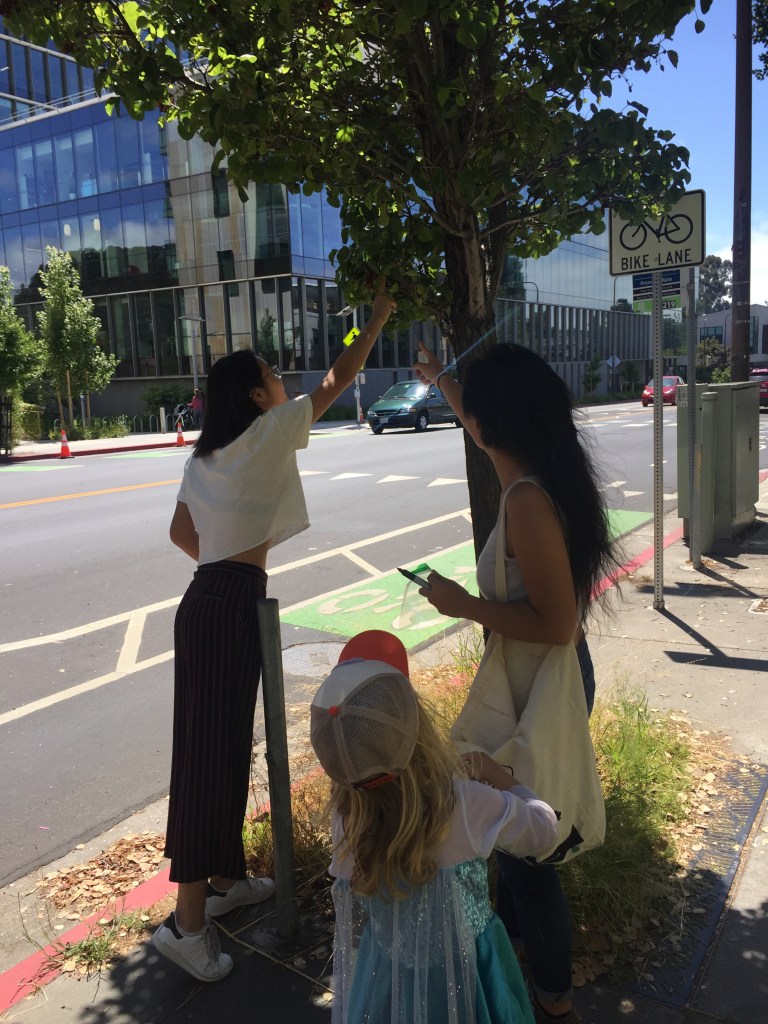
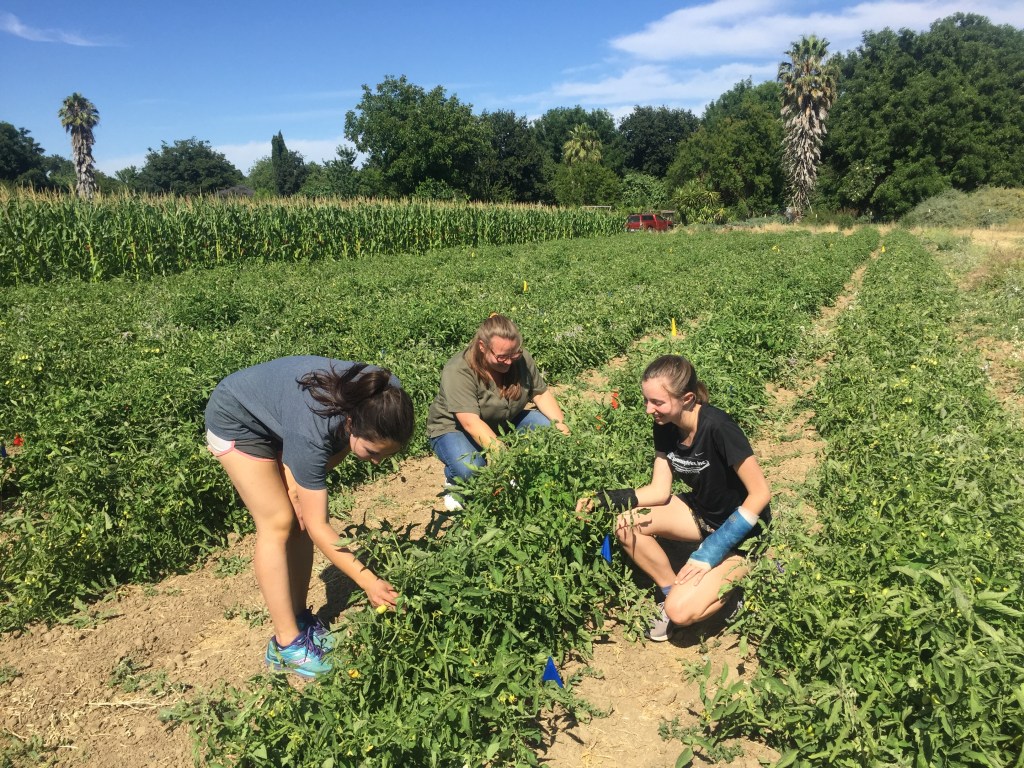
- We successfully completed not one, but three (!!!) summer field trials/experiments across sites in Berkeley, Davis, and Half Moon Bay (see pictures below). Stay tuned for data on above-belowground interactions, protective microbiomes in agriculture, and phyllosphere microbiome transmission in the next year.
- We found out that our NSF CAREER award was recommended for funding, which means the Pear Tree Fire Blight project is official! Thanks to the hard work of 6 undergraduate researchers, we’ve performed monthly sampling of 24 Bradford Pear Trees around Berkeley for the last four years and can now compare our phage local adaptation and host range results to the full viral metagenomes from this natural disease system!
- We had a number of publications resulting from the creativity and hard work of the group and our collaborators, including (only listing those not covered in earlier posts):
- Hernandez, C. A., & Koskella, B. (2019). Phage resistance evolution in vitro is not reflective of in vivo outcome in a plant‐bacteria‐phage system. Evolution, 73(12): 2461-2475. **Highlighted here: Wagner, K. S., & Rajkov, J. (2019). Digest: Lab versus nature: Disease resistance evolution differs between environments. Evolution**
- Morella, N. M., Weng, F. C. H., Joubert, P. M., Metcalf, C. J. E., Lindow, S., & Koskella, B. (2019). Successive passaging of a plant-associated microbiome reveals robust habitat and host genotype-dependent selection. PNAS, online early https://doi.org/10.1073/pnas.1908600116 **Highlighted here: Copeland, C., & Schulze-Lefert, P. (2019). Leaf-derived bacterial communities adapt to the local environment. PNAS. and covered here: https://news.berkeley.edu/2019/12/06/how-do-you-cultivate-a-healthy-plant-microbiome/ and here: https://plantae.org/research/what-were-reading-this-week/successive-passaging-of-plant-associated-microbiome-reveals-robust-habitat-and-host-genotype-dependent-selection-pnas/**
- Dickinson, A. W., Power, A., Hansen, M. G., Brandt, K. K., Piliposian, G., Appleby, P., … & Vos, M. (2019). Heavy metal pollution and co-selection for antibiotic resistance: A microbial palaeontology approach. Environment international, 132, 105117.
- Bass, D., Stentiford, G. D., Wang, H. C., Koskella, B., & Tyler, C. R. (2019). The Pathobiome in Animal and Plant Diseases. Trends in ecology & evolution, 34(11): 996-1008.
- Lin, D. M., Koskella, B. L., Ritz, N. L., Lin, D., Carroll-Portillo, A., & Lin, H. C. (2019). Transplanting Fecal Virus-Like Particles Reduces High-Fat Diet-Induced Small Intestinal Bacterial Overgrowth in Mice. Frontiers in cellular and infection microbiology, 9, 348.


 Koskella Lab at UC Berkeley